Add1

Tuesday, October 31, 2017

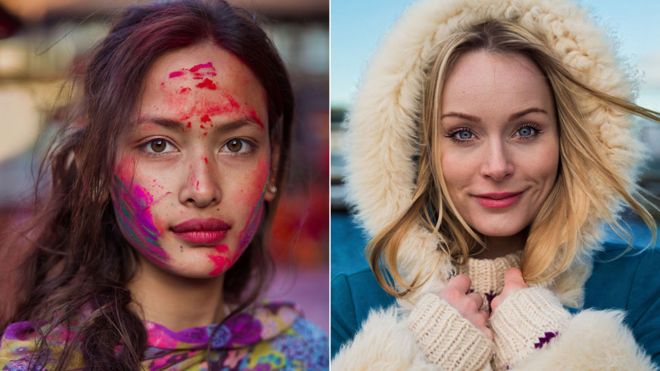
Is this what real beauty looks like?

An image from Atlas of Beauty

"Go to Google Images right now," says photographer Mihaela Noroc, "and search 'beautiful women'."
I do as she tells me. Millions of results come back.
"What do you see?" she asks. "Very sexualised images, right?"
Yes. Many of the women in the top pictures are wearing high heels and revealing clothes, and most fit into the same physical mould - young, slim, blonde, perfect skin.
"So beauty all the time is like that," Mihaela says. "Objectifying women, treating them in a very sexualised way, which is unfortunate.
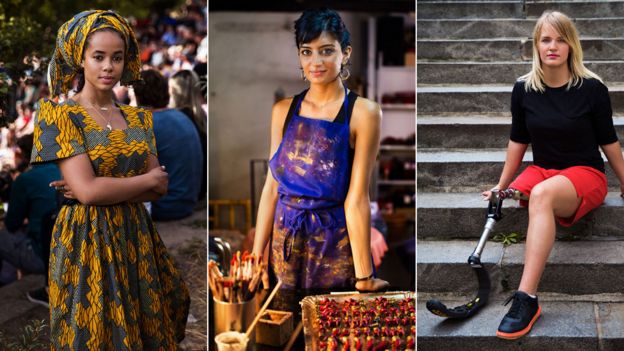
An image from Atlas of BeautyImage copyrightMIHAELA NOROC
Image captionL-R: Portraits taken in Germany, Italy and France
"Women are not like that. We have our stories, our struggles, our power, but we just need to be represented, because young women, they see only images like this every day, so they need to have more confidence that they can look the way they look and be considered beautiful.
so beauti full giral
"But," she adds, "Google is us, because we are all influencing these images."
Mihaela has just released her first photography book, Atlas of Beauty, which features 500 of her own portraits of women.
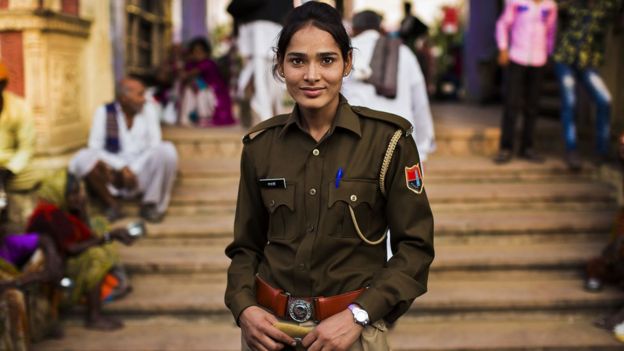
An image from Atlas of BeautyImage copyrightMIHAELA NOROC, INDIA
Image captionPushkar, India: "I was happy to see women have joined public forces all over the world"
The Romanian photographer's definition of beauty, however, appears to be that there is no definition. The women are a variety of ages, professions and backgrounds.
"People are interested in my pictures because they portray people around us, everyday people around the street," Mihaela explains.
"Usually when we talk about beauty and women, we have this very high, unachievable way of portraying them.
"So my pictures are very natural and simple. And this is, weirdly, a surprise. Because usually we are not seen like that."
Each of the book's 500 portraits has a caption with information about where it was taken, and, in many cases, the subject.
The locations are varied, to put it mildly. They include Nepal, Tibet, Ethiopia, Italy, North Korea, Germany, Mexico, India, Afghanistan, the UK, the US, and the Amazon rainforest.
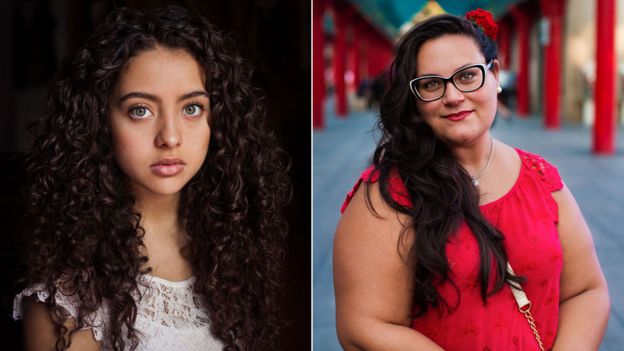
An image from Atlas of BeautyImage copyrightMIHAELA NOROC
Image captionMihaela took these photographs in Colombia (left) and Milan, Italy
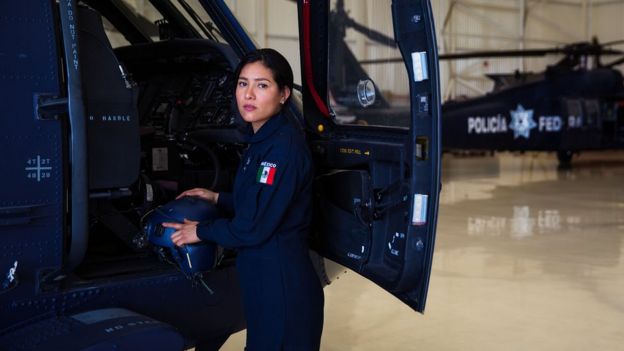
An image from Atlas of BeautyImage copyrightMIHAELA NOROC
Image captionCaptain Berenice Torres is a helicopter pilot for the Mexican Federal Police
Some locations, however, proved more problematic than others.
"I approach women I want to photograph on the street. I explain what my project is about. Sometimes I get yes as an answer, sometimes I get no, that really depends on the country I'm in," she explains.
"When you go to a more conservative society, a woman is going to have a lot of pressure from society to be a certain way, and her day-to-day life is carefully watched by somebody else.
"So she's not going to accept being photographed very easily, maybe she's going to need permission from the male part of her family.
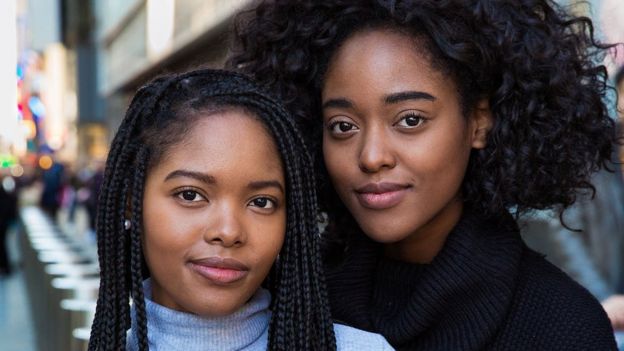
An image from Atlas of BeautyImage copyrightMIHAELA NOROC
Image captionSisters Abby and Angela were photographed in New York
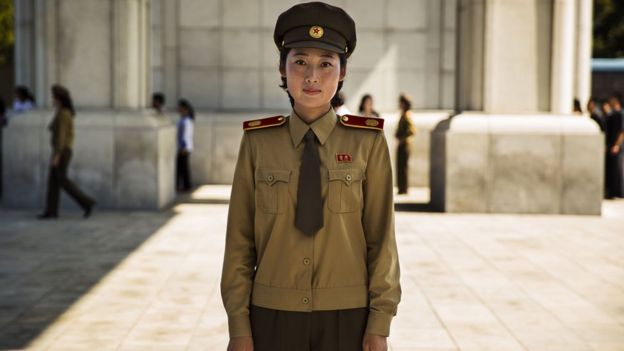
An image from Atlas of BeautyImage copyrightMIHAELA NOROC
Image captionA guide at a military museum in Pyongyang, North Korea
"In other parts of the world they are extremely careful because there might be issues concerning their safety, like in Colombia. Because they had Pablo Escobar and the mafia for so many years.
"So they say 'OK, so you're going to take my picture but I'm probably going to be kidnapped after that because you're part of the mafia and you're not who you're saying you are'."
She adds: "If somebody were to start this project just with men, it would be much easier, because they don't have to ask permission from their wives, sisters or mothers."
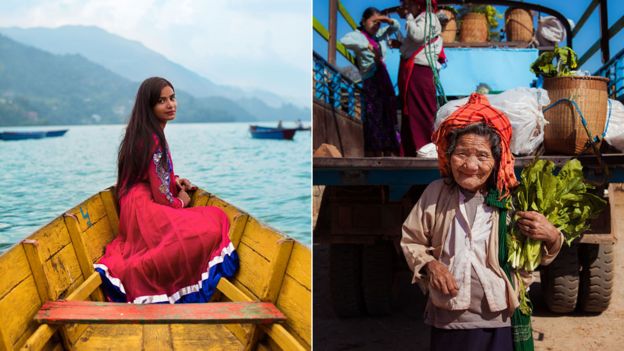
An image from Atlas of BeautyImage copyrightMIHAELA NOROC
Image captionLeft: Pokhara, Nepal. Right: "This is what shopping looks like for many people around the world," Mihaela says of her portrait taken in Nampan, Myanmar
Mihaela says she occasionally puts pictures through Photoshop, but not for the reasons you might think.
"When you take a picture, it's usually raw, and that means it's very blank, like a painting, you don't have the colours you had in the reality.
"So I try to make it as vibrant and colourful as it was in the original place. But I'm not making anyone skinnier or anything like that, never, because that's very painful.
"Because I also suffered as a woman growing up from all kinds of difficulties, I wanted to be skinnier, look a certain way, and that was also related to the fake images I saw in day-to-day life."
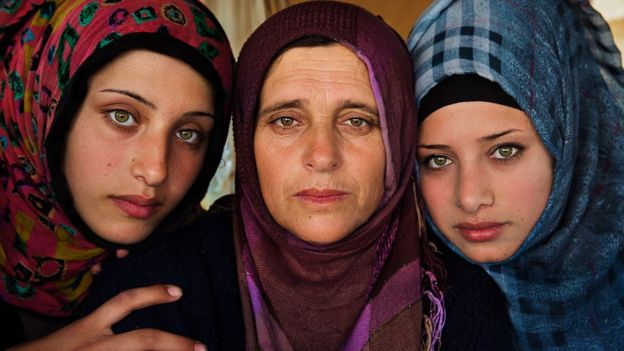
An image from Atlas of BeautyImage copyrightMIHAELA NOROC
Image captionIdomeni Refugee Camp, Greece: This woman and her daughters fled the war in Syria
It's safe to say Mihaela's photography book is quite different tonally to, say, Kim Kardashian's 2015 book of selfies.
"These days, the bloggers, the famous people of our planet have set this unachievable and fake beauty standard, and it's very difficult for us as women to relate to that," she says.
"Kim Kardashian has 100 million followers on her Instagram page and I have 200,000, so imagine the difference - it's astonishing. But slowly, slowly, I think the message of natural and simple beauty will be spread around the world."
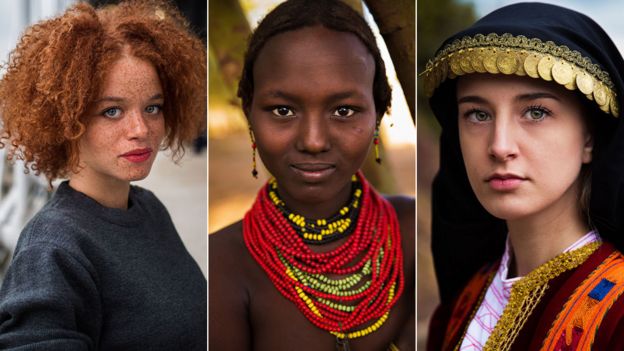
An image from Atlas of BeautyImage copyrightMIHAELA NOROC
Image captionL-R: Portraits taken at the Pompidou Centre in Paris, Omo Valley in Ethiopia and Delphi, Greece
So what's the best piece of advice Mihaela could give to anyone keen to get into photography? Buy a good quality camera? Learn about lenses and angles?
Not exactly.
"Buy good shoes," she laughs, "because you're going to walk and explore a lot."
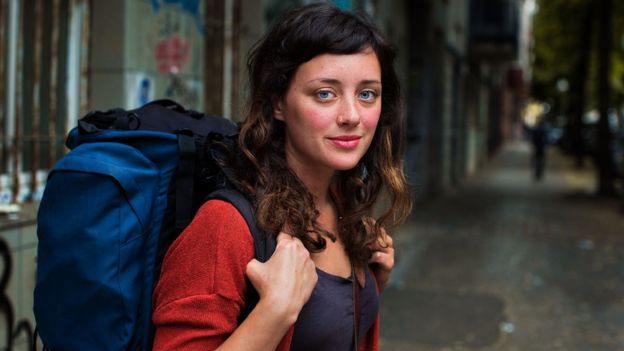
An image from Atlas of BeautyImage copyrightMIHAELA NOROC
Image captionLisa was backpacking through Berlin when Mihaela met her

Alzheimer's nutrient drink falters in clinical trial

Older woman holding a glass of strawberry-flavoured drink

There is no good evidence that a nutrient drink being sold online in the UK to "help" people with early Alzheimer's actually slows the disease, say experts.
Latest trial results in patients who took Souvenaid did not find it preserves memory and thinking.
The authors say in Lancet Neurology that bigger studies are needed to show if the product can work as hoped.
And consumers should be aware that the £3.49 per bottle drink "is not a cure".
Manufacturer Nutricia says its drink should only be taken under the direction of a doctor, specialist nurse or pharmacist.

What is the drink?

Souvenaid comes in strawberry or vanilla flavour and contains a combination of fatty acids, vitamins and other nutrients.
Taken once daily, the idea is that the boost of nutrients it provides will help keep Alzheimer's at bay in people with the earliest signs of this type of dementia.
But the latest phase two clinical trial results do not prove this.

What the trial found

The study involved 311 patients with very early Alzheimer's or mild cognitive impairment. All of them were asked to take a daily drink, but only half were given Souvenaid - the other half received one with no added nutrients.
After two years of participating, the patients were reassessed to see if there was any difference between the two groups in terms of dementia progression, measured by various memory and cognitive tests.
The treatment did not appear to offer an advantage, although patients in the Souvenaid group did have slightly less brain shrinkage on scans, which the researchers say is promising because shrinkage in brain regions controlling memory is seen with worsening dementia.
But experts remain cautious.
Prof Tara Spires-Jones, a dementia expert at the University of Edinburgh, said: "Some of the other tests of brain structure and function were promising, but overall this study indicates that a specific change in nutrition is unlikely to make a large difference to people with Alzheimer's, even in the early stages.
"There is strong evidence that a healthy lifestyle including exercise and a healthy diet can help reduce risk for developing dementia, but once the brain damage starts, a dietary intervention is unlikely to stop the disease."
Another expert, Dr Elizabeth Coulthard from University of Bristol, said people should think carefully before buying something that is, as yet, unproven.
Dr David Reynolds, from Alzheimer's Research UK, advised: "If people are worried about their memory, or are considering buying and taking Souvenaid as a supplement to manage their diet, then it is important that they discuss this with their GP."
A spokeswoman from Nutricia said: "We are pleased that this adds to the body of evidence for Souvenaid and we remain committed to ongoing and further clinical research."

Me too: I was sexually harassed at 11

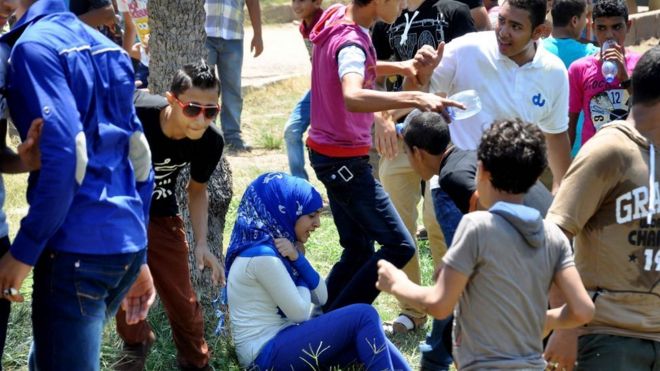
Cairo teenagers harass a girl in a park

Following the allegations against Harvey Weinstein, women have been sharing their stories of sexual harassment online using the hashtag #metoo. Here, Shaimaa Khalil writes about her first experience of harassment as a child growing up in Egypt.
There's one particular day - soon after I turned 11 - that I can't forget.
I was at my grandparents' house and for the first time I'd been allowed to go out with a cousin and her friend, without any adults - three girls on our own, out on our first adventure.
"Be careful. Don't go too far and don't spend your money on stupid things," my grandma warned us. She meant ice cream - and yes, we were planning to spend our money on that.
I was excited, but nervous. This needed to go well if I was to stand a chance of ever going out on my own!
"OK Shaimaa," I remember thinking. "No falling, no fighting, no losing your money." I should have added: "No getting sexually harassed by teenage boys." But how could I know?
In the busy summer streets of Alexandria, we hadn't realised we were being followed. But three boys walking behind started bumping into us. Then one of them groped me.
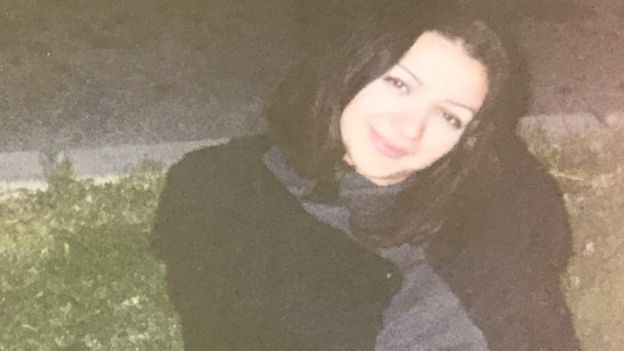
Shaimaa Khalil sitting on the grassImage copyrightSHAIMAA KHALIL
Image captionShaimaa Khalil as a teenager in Egypt
All I could do to escape our tormentors was walk ahead as fast as I could, with my cousin and her friend trying to catch up.
But they kept following us.
The three of us held hands and rushed back toward my grandparents' house.
The boys were right behind. Now verbally harassing us.
I was frightened, but also angry. These boys had ruined my big day. I turned around and yelled: "Kifaya! Enough!"
"Kifaya!" one of them echoed, mocking me.
Later on, my mother chastised me. "You talked to them?" she fumed. "You don't talk to someone who's harassing you … you just keep going. That's what they want - if you engage and make a scene, they win."
My grandma chimed in. "Were you loud? Were you laughing and being silly for no reason? I know how you can get, Shaimaa."
I tried to remember if I'd laughed. I probably had. I was having fun - until I got sexually harassed.
"And why that sleeveless shirt? It's too short, your whole bottom is showing," she went on.
I had no idea how the conversation turned from me complaining about three horrible boys and what they did to me, to my being blamed for their actions.

Find out more

  • From Our Own Correspondent has insight and analysis from BBC journalists, correspondents and writers from around the world
  • Listen on iPlayer, get the podcast or listen on the BBC World Service, or on Radio 4 on Thursdays at 11:00 and Saturdays at 11:30 BST

It was the first time I was sexually harassed but of course not the last. Some later incidents were much worse. But that day had a lasting effect. It informed the way I felt about walking the streets of Egypt and how I behaved in them.
All my life I wanted the freedom to do things on my own, and here I was, confronted with the reality for Egyptian women - that with the freedom to be in the streets came harassment.
My mother laid down some rules:
1. It will happen. It's normal.
2. Don't smile. Frown preferably.
3. Walk fast. Don't linger.
4. Wear long shirts that cover your behind.
5. Do not bring attention to yourself in any way.
In the years to come, these rules would sometimes work, but often wouldn't.
Sexual harassment would become a part of mine and my friends' lives. Our experiences varied from verbal harassment, to inappropriate touching, to groping, to having men try to rip our clothes off.
The culprits were everyone from random men on the streets - shopkeepers, doormen- to teachers, co-workers and relatives.
But we wouldn't dream of speaking up. As with all Egyptian women, we had to balance harassment on the streets against more restrictions at home.
Shaimaa Khalil press photograph
Image captionShaimaa Khalil is a presenter for Newsday on the BBC World Service
In 2013 a UN report said that 99% of the women it surveyed in Egypt had been sexually harassed. "We don't need a report," one of my friends laughed at the time. "Just come and live with us for a bit!"
A recent poll suggests that Cairo is the world's most dangerous megacity for women, but I can attest that my city also lives up to this scandalous reputation.
Things have moved on quite a bit since I was 11. Young women are now much more vocal. There have been campaigns against sexual harassment and law enforcement takes it more seriously.
Yet all of this hasn't stopped the harassers.
I don't live in Egypt now, but when I visit I can feel myself tense up. I still have my invisible armour - those rules my mum set out. I'm always on guard when I'm alone in the streets.
I have an eight-year-old niece who reminds me so much of myself when I was her age. Soon enough she'll want to venture out on her own.
And here's what I'll probably tell her: "Don't laugh, don't linger, and if something happens, call someone and get back home."
But here's what I really want to tell her: "You look beautiful. Laugh, have fun, enjoy yourself - and if some horrible person harasses you, shout, make a scene and defend yourself! And always, always remember: it is not your fault!"

Manus Island: Refugees refuse to leave Australian centre

Manus Island: Refugees refuse to leave Australian centre

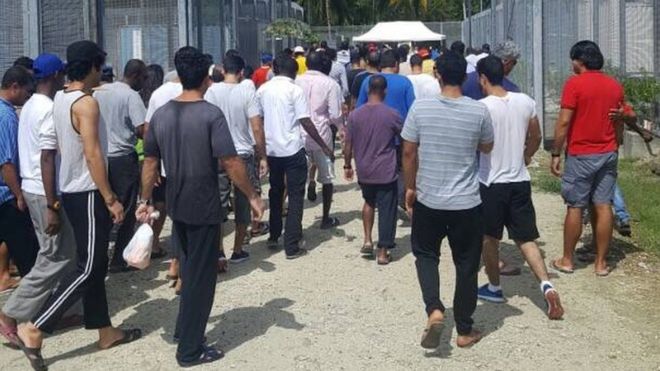
Refugees and asylum seekers at the Australian-run centre in Papua New Guinea

Image Refugees held by Australia in Papua New Guinea (PNG) have launched legal action over the closure of a detentioneAustralia holds asylum seekers arriving by boat in camps on PNG's Manus Island and the small Pacific nation of NauruThe Manus Island centre is scheduled to close on Tuesday after a PNG court ruled it was unconstitutional.

1Detainees argue the closure will breach their human rights by denying them access to water, electricity and security. Many are refusing to leave.
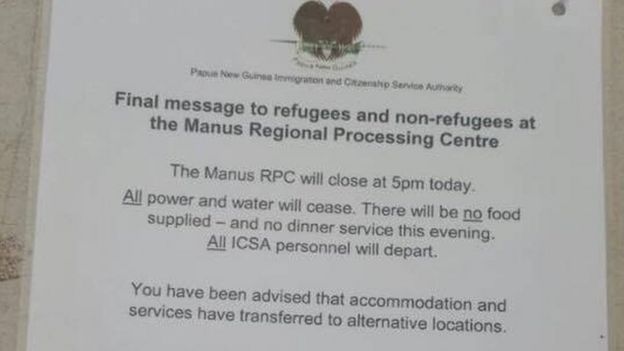
The local authorities said that all electricity, drinking water and food at the centre would cease at 17:00 local time (07:00 GMT), and that PNG defence authorities could enter the centre as early as Wednesday.

A notice at Manus Island detention centre telling detainees water and power will be cut offImage copyrightABDUL AZIZ ADAM
Image captionA notice telling detainees that water and power will be cut off

Refugees told the BBC that detainees planned to protest peacefully, and had begun stockpiling water and dry biscuits, as well as setting up makeshift catchments for rainwater.
They claimed that local residents began looting the compound on Tuesday after security guards left.
Under a controversial policy, Australia refuses to take in anyone trying to reach its territories unofficially by boat. They are all intercepted and held in the Nauru and Manus Island detention centres.

Why don't refugees want to leave?

About 600 asylum seekers have been told to leave the camp, but many have reportedly barricaded themselves inside due to fears for their safety if transferred to temporary accommodation in the Manus Island community.
The news has raised concerns of a possible siege at the facility.
"Navy and police [are] heavily armed, but we don't know who they want to go to war with, locals or refugees. So scary," tweeted Manus detainee Behrouz Boochani.
Mr Boochani added that "angry" locals were protesting in front of the camp chanting "don't come out".
Last week, Human Rights Watch warned that the group could face "unchecked violence" by local people who had attacked them in the past - sometimes with machetes and rocks.

Where would they go?

Canberra has consistently ruled out transferring the men to Australia, arguing it would encourage human trafficking and lead to deaths at sea.
However, PNG has said it is Australia's responsibility to provide ongoing support for the detainees. The Australian government says PNG is responsible for them.
The refugees can permanently resettle in PNG, apply to live in Cambodia, or request a transfer to Nauru, but advocates say few have taken up these options.
Some men already in the temporary accommodation were "comfortably accessing services and supports there", Australia's Department for Immigration and Border Protection said on Tuesday.

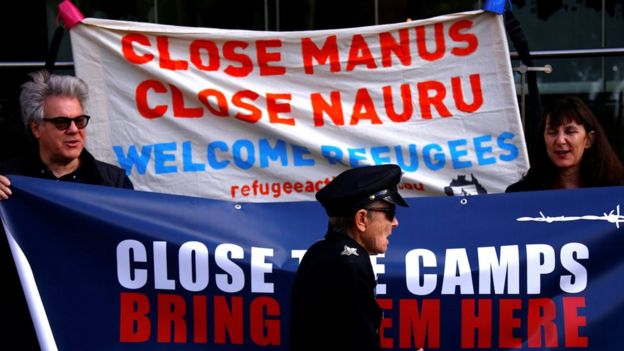
There have been protests in Australia against the detention of asylum seekers being held at centres on Papua New Guinea's Manus Island, and the South-Pacific island of Nauru, 31 August 2017Image copyrightREUTERS
Image captionThere have been protests in Australia against the Nauru and Manus Island detention centres

A separate resettlement deal struck with the Obama administration in 2016 saw the US agree to take up to 1,250 refugees from the PNG and Nauru centres.
Last month, a group of about 50 people from the detention centres became the first to be accepted by the US under the agreement.
The agreement, which is being administered under the United Nations refugee agency UNHCR, is prioritising women, children and families and other refugees found to be the most vulnerable.
However, the US has not given an estimate of how long the application process will take and it is not obliged to accept all of them.

How will the closure affect detainees?

Greg Barns, a lawyer assisting with the legal action, said the closure would breach rights enshrined in PNG's constitution.
"The men are vulnerable to attacks and physical harm so we are seeking to ensure their constitutional rights are not breached and there is a resumption of the basic necessities of life," he told the BBC.
"The men have been dumped on the street, literally. What is going on is unlawful."
The application also seeks to prevent the forcible removal of the men to an alternative centre on the island, and calls for them to be transferred to Australia or a safe third country.

'Australia's Guantanamo'

Australia first opened Manus Island centre in 2001. It was closed in 2008 and re-opened in 2012.
Six asylum seekers have died since 2013, including Iranian man Reza Barati who was murdered during a riot.
Earlier this year, the government offered compensation totalling A$70m (£41m; $53m) to asylum seekers and refugees detained on Manus Island who alleged they had suffered harm while there.
The lawsuit alleged that detainees had been housed in inhumane conditions below Australian standards, given inadequate medical treatment and exposed to systemic abuse and violence.
The government called the financial settlement "prudent", but denied wrongdoing.

Wallpaper

Bridal

my facebook